01
Before I started building subscriptions, I thought it was just two things: user pays, user cancels.
Once I actually dug in, the number of states made my head spin.
My first reaction was — isn't a subscription just subscribing and then being able to cancel? How hard can it be?
The deeper I went, the more I realized this "complexity" isn't unnecessary — it's real business requirements.
02
Let's start with the domestic (China) scenario: auto-renewal, trial period, cancel before expiry, cancel immediately. Roughly four cases. That's it.
But after reading through payment platform docs and studying subscription systems, I discovered that global SaaS has all of these on top: plan upgrades, plan downgrades, whether changes take effect immediately or next cycle, prorated charges on upgrades, downgrades deferred to the next billing cycle, switching from annual to monthly, switching from monthly to annual, payment failures, and handling multiple webhooks...
The first time I saw all these terms, my immediate thought was — seriously, this many?
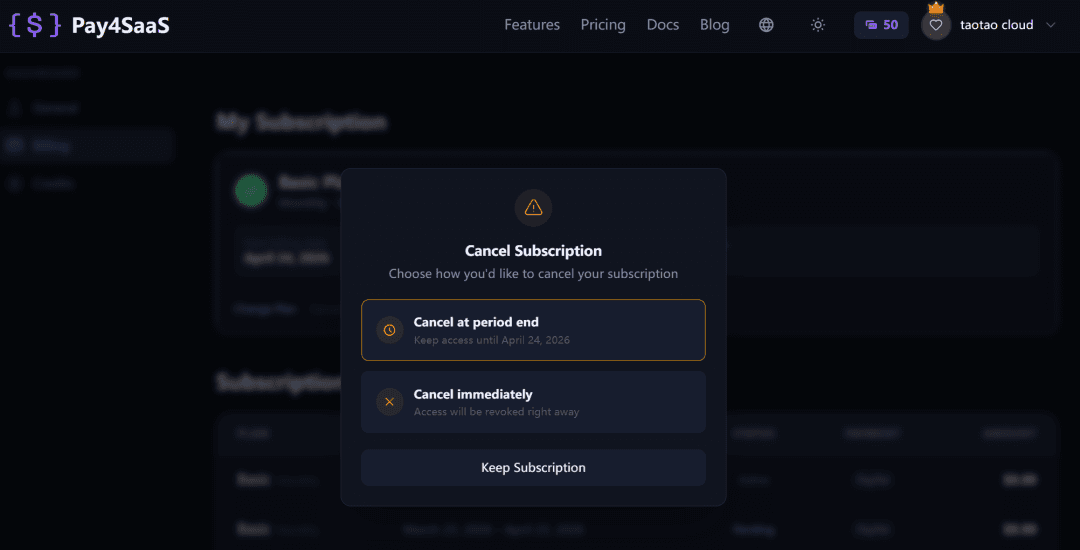
Just "cancellation" alone splits into two types: immediate cancel and cancel at period end. The handling logic is completely different, and getting it wrong means user complaints — or worse, disputes.
03
You might say — why not keep it simple? Just support renewal and cancellation, call it a day.
Sure, you can. But the user experience gap is huge.
For example, without upgrade/downgrade support, if a user wants to switch to a higher plan, they have to cancel first, then re-subscribe. That's two steps.
With upgrade/downgrade? One click to confirm, instant upgrade, prorated difference charged automatically, money in your account, better UX. Why wouldn't you do it?
That tiny gap in user experience might just become churn.
Some things in design should be minimal — like yesterday's analysis on reducing payment button clutter. But this? This is something you truly cannot skip.
04
So why does global subscription have so many scenarios?
Because the SaaS environment abroad is fundamentally different.
In China, users are used to one-time payments or annual plans — renew or don't, no big deal. But the mainstream model for global SaaS is monthly subscriptions. Users have a long-term relationship with your product, and the longer the relationship, the more complex the states.
Second, international users have strong awareness of their subscription rights. They read the terms carefully. They know they can cancel anytime. They expect prorated charges on upgrades. This isn't being picky — it's their default consumer expectation. If we don't support it, they see our product as unprofessional.
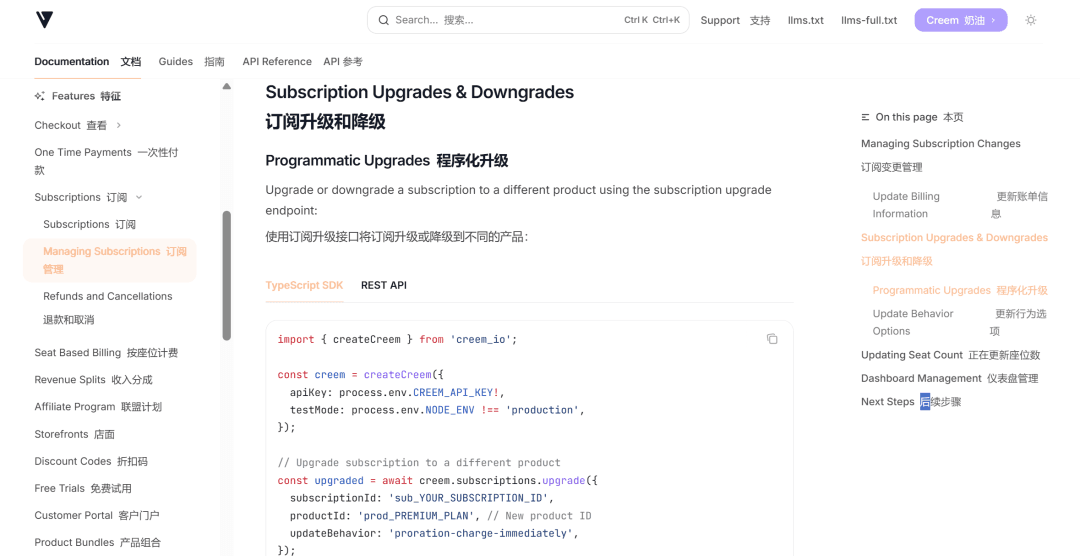
More importantly, major international payment platforms — whether Stripe or Creem — have this entire state machine built in.
Creem:
Stripe:
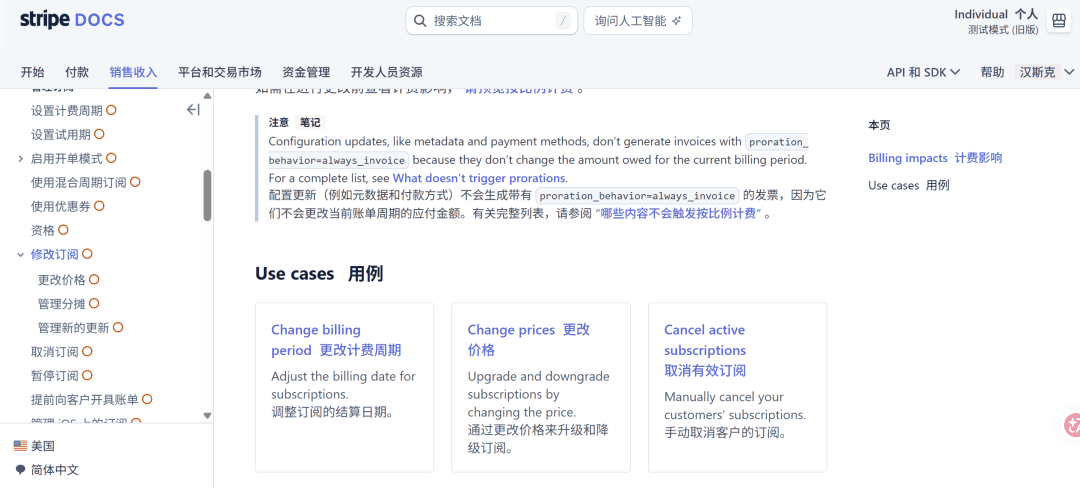
Proration, grace period, trial, immediate cancel, cancel at period end... These aren't optional features we can choose to skip. They're payment standards. Ignoring them means deviating from industry norms, and you'll always have that nagging worry that something will go wrong.
So having many states isn't over-engineering or over-design — it's the entry ticket to the international market.
05
At the time, I gritted my teeth and worked through the logic for every single scenario. Once I finished, I actually felt relieved. The real challenge isn't the logic — it's the edge cases. Because while there are many states, the underlying logic is self-consistent. Once you nail one, the next falls into place.
Now that I've walked through the entire subscription lifecycle, it feels second nature. After all, I've run through 60+ test cases multiple times — I've practically worn them out, haha.
For instance: a user upgrading on the last day of their trial. An annual subscriber downgrading in month 11. A payment failing mid-cycle. Every unhandled, unconsidered scenario is a potential vulnerability.
Just listing out all these edge cases, testing them, and verifying them took an enormous amount of time.
Because when something goes wrong, either we lose money or the user loses money. There's no third outcome.
06
All of these scenarios — upgrades, downgrades, trials, annual-to-monthly switches, monthly-to-annual switches, and every edge case in between — I've handled them all in Pay4SaaS. Change the config, deploy, and it works. If you're interested, check out pay4saas.com to learn more.